
Remote Work at Kuva Space: Trust, Flexibility, and Shared Mission
At Kuva Space, remote work is built on trust, autonomy, and clarity. We expect results, but we also believe people do their best work when they have the freedom to decide how to get there.
Our headquarters are in Espoo, Finland, where most of our team works either fully onsite or in a hybrid model. Currently, a bit over 10% of Kuva employees work fully remotely from different countries across Europe. For us, remote work depends on the role and the team — not on rigid company-wide rules. Naturally, the day-to-day work of a Mechanical Engineer building and testing satellites looks very different from that of a Data Scientist developing AI models for hyperspectral data.
To give a better picture of what remote work is really like at Kuva Space, we spoke with a few fully remote team members about the benefits, the challenges, and how we stay connected around a shared mission: making the world more sustainable and secure with trusted planetary intelligence.
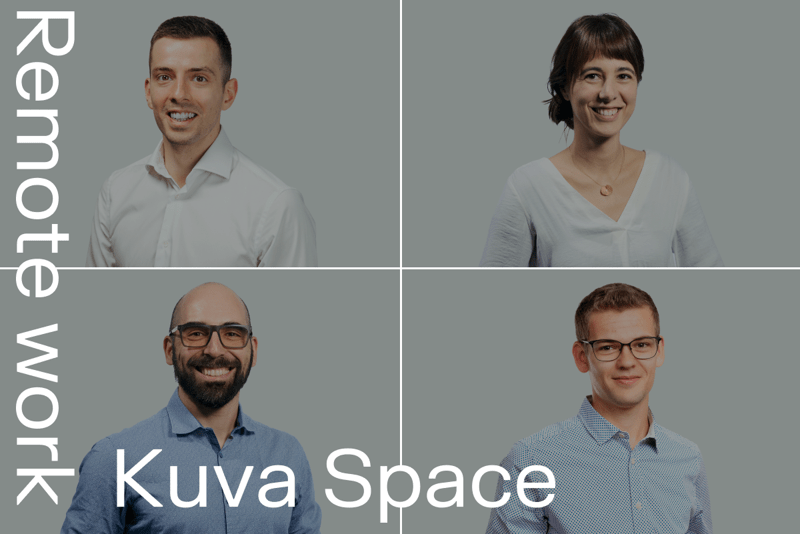
We spoke with four fully remote team members based in Belgium and Spain: Lennert Antson, Data Processing Pipeline Lead; Arthur Vandenhoeke, Head of AI Development; Elena Marimon, Head of Data Engineering and Quality; and David Paredes, Head of Systematic AI.
Why remote work works
When we asked what they value most about remote work, one theme came up repeatedly: flexibility. “I really like remote work, specifically because it gives so much flexibility to organize our family life,” says David. “My spouse has a very restricted schedule, and my flexible working hours make taking care of our kid much easier.”
For many, remote work also creates the conditions for deeper focus. Complex technical work often requires long stretches of uninterrupted thinking, something that can be harder to find in a busy office. “Every now and then, I need deep focus time for one topic where nothing else matters,” Arthur says. “I would get a little less done if I worked in an office,” Lennert adds. “I’m really productive at home, and I find the distraction-free environment very useful.”
Remote work can also open doors. Careers in the space industry often cluster around specific hubs, which can make it difficult for talented people to enter the field without relocating. For Lennert, Kuva Space offered a chance to combine a long-standing interest in space technology with the ability to stay close to home. Elena also values working on something meaningful while staying where she feels most rooted.
Creating structure at home
Of course, remote work also comes with its own challenges. Without a commute or a clear physical separation between office and home, building routines becomes especially important. “I do all the same steps in the morning as if I were going to the office,” Elena says. “I take a shower and wear work clothes, which makes it easier to start work in the mornings.”
Switching off at the end of the day can also be difficult. “The clear line between work and life kind of disappears,” says David. “In my line of work, I’m always thinking about stuff, and work-related ideas pop up at any time. I’ve become better at separating things, though. I mute notifications during my holidays, and I’m not actively looking at Slack during free time.”
David also emphasizes healthy habits and physical movement during the day. “I have a walking pad at home, so I make sure I don’t become too physically immobile. I also step outside for a short walk during midday.”
Staying connected as a team
One of the most common assumptions about remote work is that it can feel isolating. But for Kuva’s remote team members, strong collaboration and regular communication make a big difference. Elena says she has never felt disconnected from the team. “We have a very collaborative atmosphere, and there is always someone to reach out to and ask for help. We give each other a daily update in Slack, and each meeting starts with a casual conversation.”
Several team members highlighted the same ingredients for successful remote work: clear goals, mutual trust, and open communication. “We think that delivering goals is more important than observing somebody sitting at their desk,” Elena says. “We actively communicate priorities, and we know the outputs we are expected to deliver.”
Arthur points to another important part of collaboration: leaving space for spontaneity. “We allow ourselves to think out loud in the weekly meetings and not necessarily stick to the agenda,” he says. “Sometimes it’s important to allow ourselves to be sidetracked and promote curiosity, interaction, and sharing unfinished thoughts.”
He also believes that remote work works best when people are independent, but quick to ask for help when needed. “Remote work requires a lot of independence and the ability to focus. It’s important to be self-reliant and resourceful, but also to let others know quickly if you are encountering challenges instead of trying something for too long when it won’t work.”
The value of meeting in person
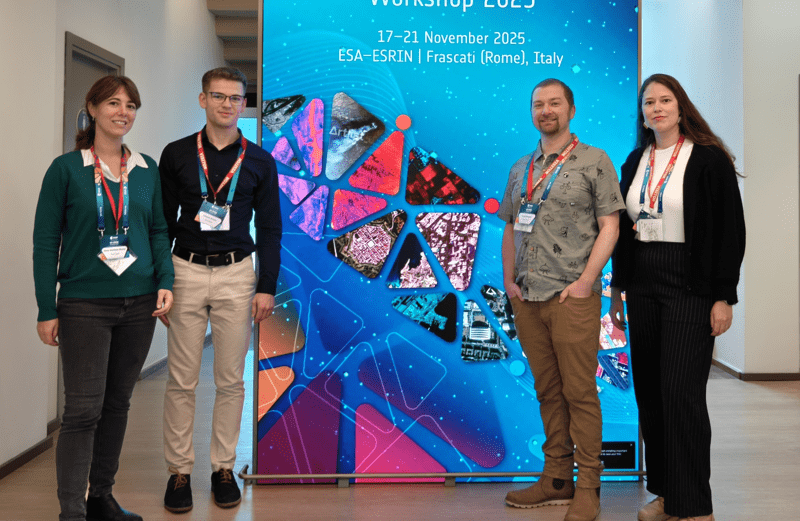
Even with strong remote collaboration, some things are still best experienced face to face. Our remote team members especially appreciate opportunities to meet colleagues in person during company gatherings, celebrations, and conference trips. “I really like visiting Finland and especially seeing colleagues from other teams and departments,” says Lennert. “I really like the chance to meet others during our biannual Kuva Team Days in winter and spring,” David adds.
At Kuva Space, remote work is not about being physically distant from the team. It’s about creating the right conditions for people to do meaningful work, stay connected, and contribute in the way that best suits both their role and their life. We always share in our job advertisement whether the role is onsite, hybrid, or remote. If you value ownership, flexibility, and purposeful work, (remote) opportunities at Kuva Space may be a great fit!